Extortion is not a pay money problem. It is a crisis problem.
Most people do not fail because they lack information. They fail because the moment pressure hits, their thinking collapses. Fear narrows vision. Time feels compressed. Every action starts reacting to the threat instead of controlling it.
That is where exposure begins.
I see the same pattern across every extortion case I handle. The leverage can be different — a relationship, private messages, business information, opinions shared in the wrong context — but the breakdown is identical. Panic drives behavior. Behavior feeds the threat.
Crisis thinking is the difference between containment and escalation.
In an extortion case, the first danger is not payment. It is emotional decision-making. Victims start trying to “fix” the situation instead of stabilizing it. They panic. They pay. They become submissive. The extortionist does not need new leverage when pressure does the work for them.
Crisis thinking does the opposite.
It slows the environment down. It separates emotion from action. It treats the threat as a process, not an emergency that must be solved immediately. Extortion rarely explodes instantly. It builds through pressure, reminders, and controlled fear. When you stall the urgency of the demands, it dilutes the predator’s urgency. Over time the leverage loses steam.
Extortion cases require a crisis mindset, not checklist advice.
Crisis thinking focuses on three things only: control, stall, and disinformation.
Control the threat by not acting out in fear.
Stall the demands through tactical stalling.
Use disinformation to manipulate the predator.
When these are managed correctly, extortion stalls. When they are not, exposure accelerates.
I have blackmail handled cases where there were no photos. No videos. No obvious material. Just opinions shared in confidence, business documents left unattended, or a private relationship crossing into the wrong hands. The mistake is believing leverage is limited to a compromising action. It is not. It only has to be damaging to you.
If you are inside an extortion threat, your job is not to make it disappear overnight. Your job is to stop feeding it and regain control of the pressure cycle.
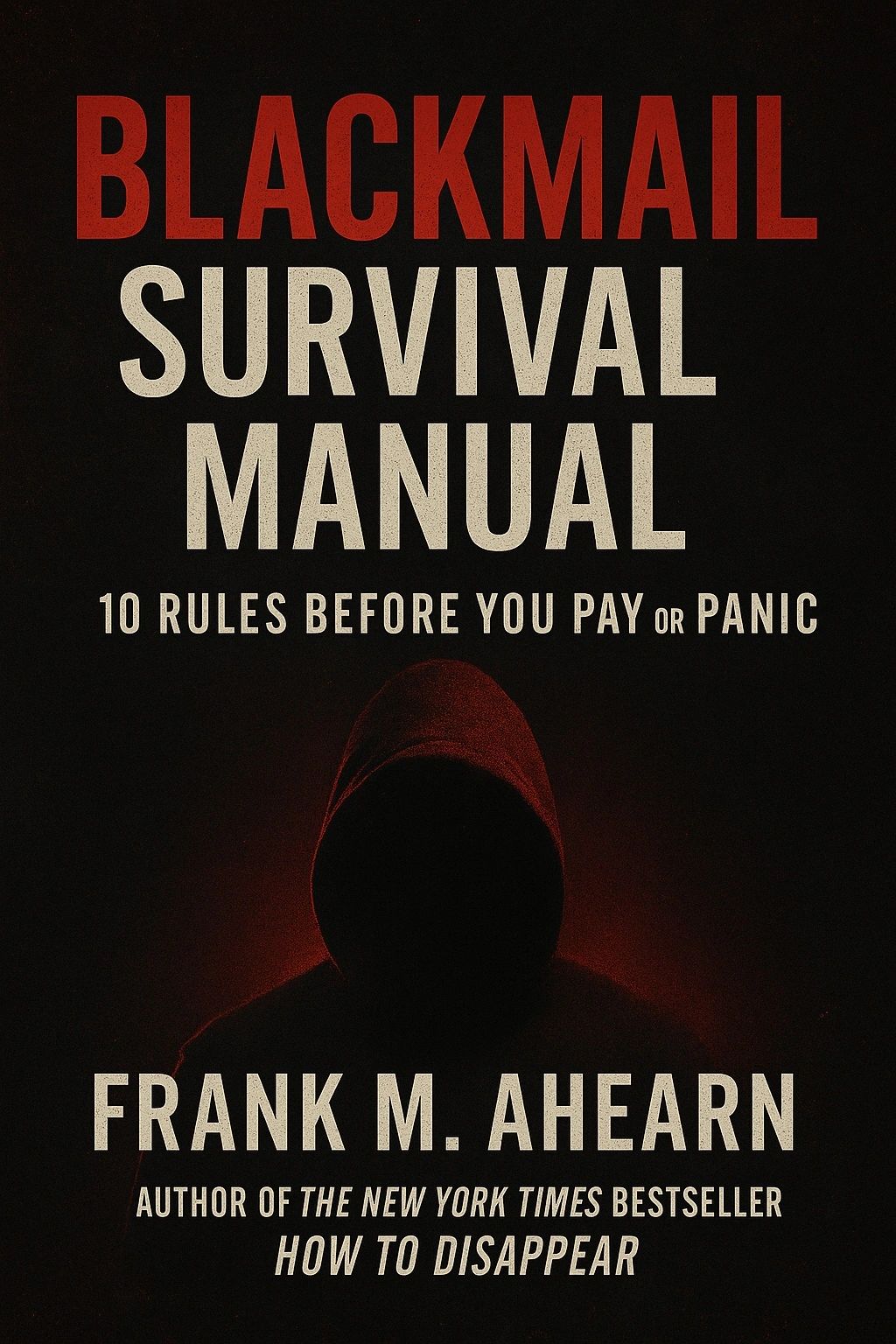
I am Frank M. Ahearn, bestselling author of How to Disappear and the modern How to Disappear: AI War Edition, and creator of The Blackmail Survival Series. My work focuses on blackmail exposure prevention, crisis control, pressure management, and preventing disasters when consequences are real. Contact Frank.
Frank M. Ahearn – Crisis Thinking When Consequences Are Real