When women are blackmailed, the internet almost always frames it the same way:
panic, shame, fear, and “what did you do wrong?”
That framing is wrong — and dangerous.
Blackmail against women is not driven by morality.
It is driven by leverage.
The leverage might come from a relationship that was misrepresented.
A man who was not who he claimed to be.
An arrangement that quietly shifted power.
A private conversation that stopped feeling private.
What matters is not how it started.
What matters is who benefits if it continues — and who loses if it ends.
That is the part most advice ignores.
Women are often targeted because they are expected to self-police. To stay quiet. To manage the emotional fallout alone. To absorb the risk while someone else applies pressure from a distance.
The blackmailer relies on that expectation.
They assume fear will create compliance.
They assume silence will buy time.
They assume shame will keep the situation contained.
Those assumptions are exploitable.
In my work, I see the same pattern repeat: women who are intelligent, capable, and decisive — but suddenly forced into reaction because someone else believes they control the narrative.
That is where outcomes are decided.
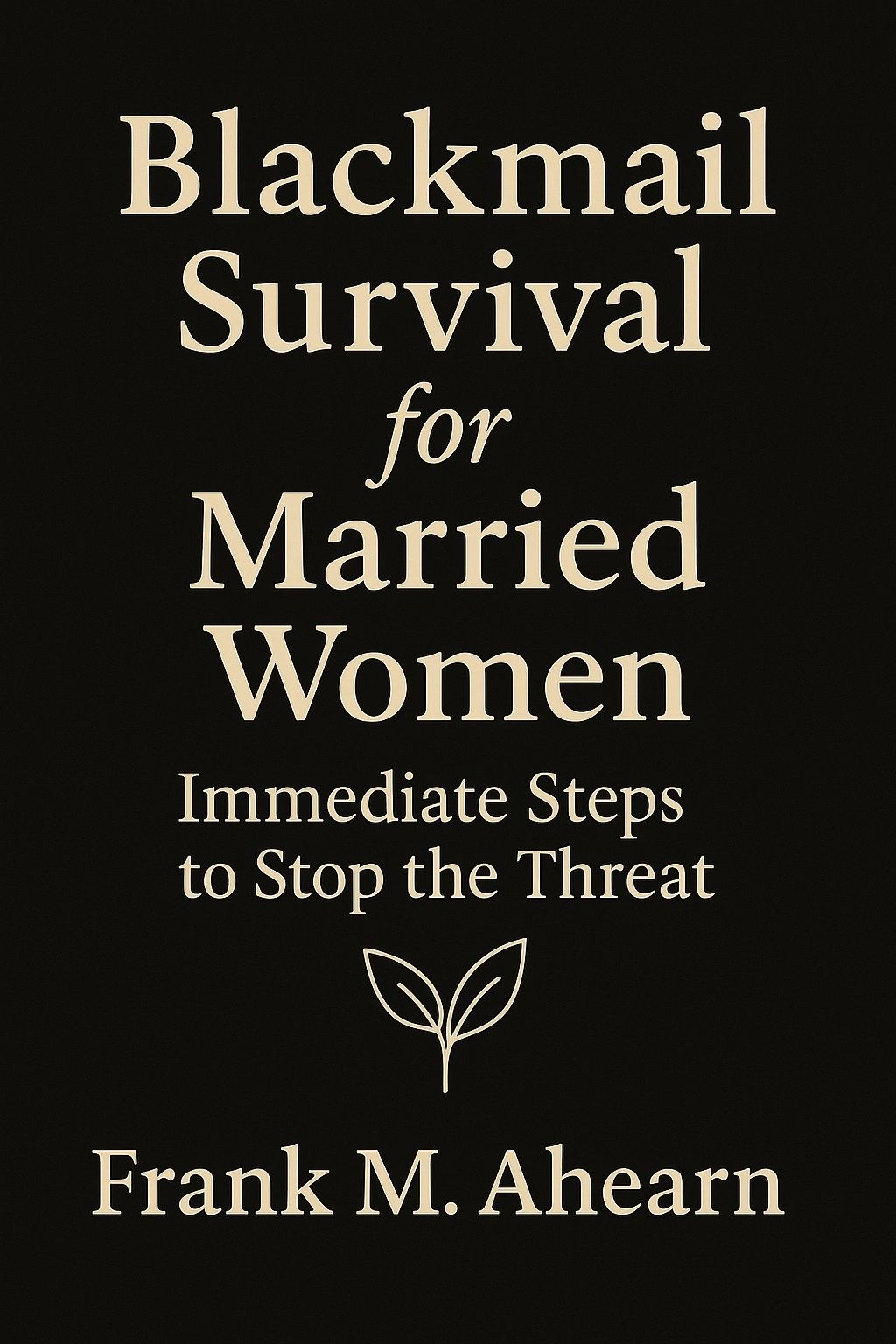
This is why I wrote Blackmail Survival for Married Women: Immediate Steps to Stop the Threat. Not to lecture. Not to moralize. But to give women a way to understand what is happening before panic locks them into bad decisions.
Blackmail does not need your agreement to exist — but it does need your cooperation to continue.
The second failure point often comes earlier, before blackmail ever appears: misreading intent in relationships.
Many women do not fall into risky situations because they are careless. They fall in because someone else is highly practiced at presenting stability, availability, or intimacy that is not real.
That is why I also wrote The Romance Detective: How to Tell If He’s a Jerk, Creep, Scammer — or Married.
Because prevention is not about avoiding dating or relationships.
It is about seeing leverage forming while there is still room to move.
Once blackmail appears, the goal is no longer comfort.
It is containment.
Quiet containment.
Identity protection.
Preventing exposure from spreading into family, work, and reputation.
This is not about being brave.
It is about being precise.
Women do not need motivational slogans when they are being blackmailed.
They need clarity, control, and someone who understands how leverage actually works.
Blackmail is not personal.
It is structural.
And once you understand the structure, the situation stops owning you.